How Gorbachev could've used modern technology to improve the implementation of his agrarian reforms
- Colman Kinane

- Jan 23, 2020
- 11 min read
Hello and welcome back to the blog, today we are sharing with you a post done by the whole team which deals with the agrarian reforms Gorbachev attempted, rather unsuccessfully, to implement in the USSR. Hope you enjoy!
Introduction
The soviet union first implemented voluntary collectivization of its agricultural lands in the year 1927 under Joseph Stalin. There was opposition to this and the uptake by the peasant farmers was not what Stalin would’ve liked. It took just two years before collectivization became compulsory and it was enforced by the armed forces. Collectivization reduced the economic power of the Kulaks, or prosperous peasants, who were forced to give up their individual farms and join massive collective farms. Collectivization was one of the cornerstones of Stalin’s first and second ‘5 year plan’. Stalin said “We are fifty or a hundred years behind the advanced countries. We must make good this distance in ten years. Either we do it, or we shall be crushed.” These 5 year plans were how he sought to close this gap and once again begin to compete with Western countries.Unfortunately the goal of collectivization to increase food supply to support the growing industrialization of the USSR was not successful and saw several famines ravish the country. The death toll from these famines ranges from anywhere around 7 million up to 14 million (Himka, 2013)
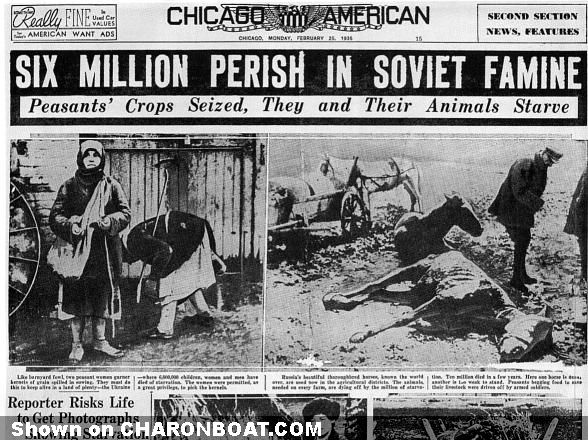
Agriculture was a particular point of contention for Gorbachev who had not hailed from privileged backgrounds like many of the top government officials. Gorbachev and his family had suffered hugely from Collectivization and Soviet Farming Policy and had endured some of the largest man made famines of the century. Gorbachev's grandfather had received land in the wake of the revolution and as such was not willing to surrender it easily to the collective farms. He retained his farm privately for a period but could not protect his family from famine, where many of Gorbachev's relatives died and over ⅓ of his hometown perished. In 1934, 3 years after the birth of Mikhail, Andrei was declared a saboteur and was sent to the Gulags in Siberia never to be seen again. Gorbachev had lived through extreme hardship and when he rose to power, he was aware that little had changed in agriculture and was committed to changing this.
Pre-Gorbachev attempts to reform agriculture
During Gorbachev’s era of Perestroika the doctrine of collectivization was questioned but this was not the first time. During many of the famines that occurred during collectivization, soviet policy moved between strict collectivization where there was no individual incentives to be more productive and policy where individuals were given limited incentives for increased production. The contentious aspect of policy was the ‘autonomous link’ which was a means of organizing and compensating agricultural labour.
In collective farms, laborers were paid by the amount of work they completed rather than the amount of crops they harvested, a system that provided no incentive to increase harvests.There was even evidence that salaries on non-profit making farms were higher than on profitable farms, which may have even encouraged non-productivity amongst the staff.
Farmers in the autonomous link system were organised into smaller groups than on collective farms and were often family. They were given land from the collective farms and ran the farm like a private business, and were paid for their output not their work which greatly incentivised increased output. The autonomous link system contradicted some of the communist views on collectivization and among hardliners was seen as far too capitalistic in nature. The Autonomous link was first introduced in the wake of the 1930's famines to help increase yields but was removed in the 1960’s due to ideological concerns as it was seen as a threat to collectivization. Between the 1960's and Gorbachev’s era in the 80's the autonomous link was reintroduced and removed 2 more times.
Gorbachev had always been a strong proponent of the autonomous link and incentivising de-collectivized farms. When he became the party secretary for his home state of Stavropol’ krai he encouraged farmers to adopt the link which was a brave move at the time as it was in opposition to the Communist policy at the time.
What Gorbachev proposed
From the moment Gorbachev was appointed General Secretary of the Communist party in 1985, he began pushing the individual initiative in Soviet agricultural policy. He was driven forward by his long held skepticism about collectivized farming as well as other contributory factors. Firstly, he had seen the success of the autonomous link during his time as the Secretary of Stavropol’ Krai and wished to have this implemented across the Soviet Union. Secondly, he had been privy to studies done on the Chinese move away from collectivized farms which saw harvests jump dramatically in a short period of time. Over a 2 year period Chinese output was said to have jumped by 100-200% and the Chinese press was unanimous in crediting ownership for this sudden growth. Thirdly, he trusted a Soviet scholar named Tatiana Zaslavskaia greatly who had proposed adopting a system similar to the Chinese and completely casting off the existing collectivized system.
To implement the reforms he and Zaslavskaia believed, Gorbachev first had to tackle the bureaucracy that would prevent him from implementing the widespread changes he was seeking. Gorbachev moved as quickly, removing five ministries and a state committee that worked with agriculture and replacing them with a unified State Committee for the Agro-Industrial Complex. By putting his own people in charge, he increased his chances of successful reform. After the considerable bureaucratic reforms, Gorbachev turned to Zaslavskaia’s second recommendation which was to adopt farm leasing on a wide scale.
Opposition to his reforms
Leasing was the topic that saw Gorbachev receive considerable and ultimately catastrophic opposition from lobbies in Moscow which halted his agrarian reforms in its footsteps.
Leasing had been given the all clear through the Agro-Industrial Complex but in the years following this there was barely any effect on Russian agriculture and certainly not the widespread leasing that was part of Gorbachev’s vision. The reason was that the officials who managed the Soviet Union’s farm system deliberately obstructed leasing. They had no interest in decentralizing decision making or in giving up their authority over resources. Leasing threatened their power, so they used their influence to obstruct change. Managers of collective and state farms declined to provide land for leasing, and local party leaders did not pressure them to do so, even though the rules required it. Gorbachev was powerless to prevent this obstructionism.
As frustrating as this opposition was Gorbachev did not give up on leasing and used public speeches to push the leasing agenda. His frustration could be felt in his speeches as seen below:
“What could’ve been easier? Take produce, sell produce, and receive money, profit. And production goes up.” (Miller, 2016)
The results of this obstructionism were widely evident. “We have taken over 60 decisions regarding agriculture since April 1985,” Gorbachev pointed out, but “so far we only have 200 cooperatives across the entire country. But we need 200,000.” Instead of cooperatives the country was burdened with loss-making collective farms: “6,500 unprofitable collective farms,” he complained, 13 percent of the total.99 “Therefore,” Gorbachev argued in July 1988, “I am very skeptical when it is said that we need to put more and more resources into farming” (Miller, 2016). Existing plans, which discussed transforming agriculture in 10-15 years, were inadequate. “We need to change economic relations in two years” (Miller, 2016). That meant loosening regulations on agriculture, he insisted: “Give land for a long period, for 50 years. No one will take it for five years. Permit giving it as an inheritance. Give tax benefits.”This meant shattering not only ideological taboos but also the bureaucracy that had governed Soviet farms since Stalin.
The result of Gorbachev's attempted reforms
Despite significant bureaucratic reforms, grand visions based on Chinese transformations and the autonomous link system ultimately there was little impact made on agricultural reforms by Gorbachev. Much of the reason for this comes back to opposition from the bureaucracy he tried so hard to reform being ever so Soviet and stoic nature of the Soviet officials. They were content to endure further hardships and resist reform so as to to stick to their ideologies that had been proven over the previous decades to be ineffective. So the question remains, What would have been different had Gorbachev had the power of today's technologies and information systems in reforming soviet agriculture.
The main reason Gorbachev did not succeed in his agrarian reforms was because of significant political obstructionism and because he failed to overhaul the bureaucracy effectively. This led to his drastic reforms being stopped dead in their tracks. There is little modern technology and information systems could have done to change the fate of Gorbachev’s ideals for a system with an autonomous link and widespread land leasing as a result. In the rest of this blog post I will examine how modern farm technology could have improved the yields from the collectivized farms which Gorbachev inherited. Had Gorbachev kept the collective farms and increased their output using technology he would’ve, more than likely, received much less opposition and perestroika may have been much more of a success.
What has changed in agriculture since the 1980s?
Since the 1980's when Gorbachev was attempting to implement his grand reforms agriculture has been revolutionized by technology and output across all major crops has increased quite significantly, as can be seen in the table below. (Ritchie and Roser, 2020)

These great increases have been felt by the Russian people as the population has stayed at around the same level since 1985. In 1985 the total population was 143.9 Million and was up to only 144.3 Million in 2016, which means that the same population is sharing resources that have significantly increased in that period (Google.com, 2020) The increase in agricultural output is a global trend that will need to continue into the future as we try to keep up with the global population increase as we continue to foster technology into agriculture. I will now outline some of the most modern agricultural technology trends that could have helped Gorbachev to increase output in the collectivized farms.
The first innovation that has seen a lot of success in recent years has been that of using drones. Many farms span acres and acres and there used to be no feasible way to view all your crops without chartering a plane and flying over. Drones are now being used to monitor crops on a large scale and they produce 3D imaging of what they see. As part of an Internet of Things (IoT) system this 3D imaging can be used to predict soil quality through analysis and for planning seed planting patterns. After the planting of the seeks, soil analysis driven by the drones provides data for irrigation and nitrogen management which further boosts output. Drones are used for the planting of seeds also and have been shown to decrease planting costs by up to 85%. The drones shoot seeds and nutrients into the soil from the air.
Drones are being used to spray chemicals on crops such as fertilizer They have the advantage of being able to survey the ground so can spray the correct amount of liquid from the ideal height to ensure even coverage. It has been found that the use of drones has improved the efficiency of crop spraying by up to five times when compared to old methods. These are only some of the use cases that have been explored through the use of drones in agriculture and there will be many more as the algorithms that read the surveillance imagery becomes more sophisticated in the future (Mazur, 2016)

Another technological advancement that has been having huge impact in almost every industry is that of machine learning and advanced analytics, and agriculture is no exception. I will focus on three areas in which ML is being used in agriculture:
Crop monitoring systems
As mentioned above, drones are being used in crop monitoring but this is done in tandem with machine learning algorithms. In the past monitoring the health of crops was an inefficient process that was very time consuming. There is significant work being done in the area to develop advanced systems that can monitor and analyse fields. At the moment most of the work being done to achieve this is based on processing of hyperspectral images and 3D laser scanning. Machine learning can help farmers with yield prediction which will help farmers to plan ahead financially and logistically for when the crop is ready to be harvested. Yield prediction has gone well beyond prediction based on historical data and now incorporates computer vision as well as comprehensive multifaceted analysis of weather, crops and economic conditions. Machine Learning is being used in disease detection to identify the areas where a disease may be spreading in the crop. If detected the area in question can be specifically targeted by chemicals, for example by drone, to limit the effect of disease. In a similar vein, Computer vision and Machine Learning can improve the detection of weeds at much lower costs and higher accuracy than traditional methods, which was to spray weed killer over the whole crop. In the future with the improvement of IoT technologies, these weed identification algorithms will be linked to robots which will kill the weeds on an ongoing basis.
One application that has seen great success was with Microsoft using AI to determine the optimal planting time for crops in India. A sample of 175 farmers participated in the study and only began planting their seeds when the AI program sent them a text message to do so. The results were staggering and on average they harvested 30-40% more than they did without the help of Artificial Intelligence. (Microsoft India, 2018)
2. Seed Selection
Machine Learning has been become more and more commonplace in seed selection. Seed selection is the process the farmer goes through to decide what crop they will sow on their land that will reap the maximum rewards. The seed chosen matters greatly, some are riskier but can lead to huge yields, while others have more stable, less valuable yields.
Machine Learning is being used to help predict the yields and associated risks for planting certain seeds and helps the farmer find the optimal trade-off. One company, Biosense are developing ML models that will be used to predict performance of various seeds in particular conditions in order to advise Mexican farmers about what seed to plant. Both the farmers and seed companies benefit. Seed companies can ensure they sell the best seed variety possible for a given region, which reduces the risk of marketing the wrong seed to the farmers while the farmers stand a better chance of a good yield. The next iteration of this technology will have a decision support tool. Through the integration of climate prediction data into the model seed companies can forecast the use of seeds best suited to the relatively fast changing future climate. (CGIAR, 2018)

3. Precision Agriculture
With more and more agricultural data being collected by advanced machines and systems there is a growing pool of data that can be mined in the pursuit of knowledge that will be helpful. One such application of this is ‘precision agriculture’, which uses historical data and ML algorithms to make decisions on a small scale, rather than a large general scale as was done before. For example, applying small amounts of pesticides to specific trees, shrubs and crops as opposed to spraying large quantities over a large area, which greatly benefits the environment and reduces the amount spent on pesticide and the widespread spraying systems.
These are only some of the innovations that are revolutionizing farming at the moment. There are countless other innovations that have occurred in the 35 years since Gorbachev sought to change soviet agriculture for the better but I hope I have illustrated the value that farm technology and information systems could have had on the Soviet Unions collectivized farms. A common theme among these innovations is the move towards automation which would have decreased the issue of the workers on the farms being unmotivated to produce. It takes the efficiency of production out of the hands of the workers to an extent and places it in the hands of machines and technology.
Bibliography:
Himka, John-Paul, 2013. "Encumbered Memory: The Ukrainian Famine of 1932–33". Kritika: Explorations in Russian and Eurasian History. 14(2): 411–436. doi:10.1353/kri.2013.0025.
Miller, C., 2016. Gorbachev's Agriculture Agenda: Decollectivzation and the policies of perestroika. Explorations of Russian and Eurasian literature, 17(1), pp. 95-118.
Ritchie, H. and Roser, M., 2017. Crop Yields. [online] Our World in Data. Available at: https://ourworldindata.org/crop-yields [Accessed 30 Jan. 2020].
Google.com., 2020. Russia population in 1985 - Google Search. [online] Available at: https://www.google.com/search?q=russia+population+in+1985&oq=russi&aqs=chrome.0.69i59j69i57j0l5j69i60.1230j0j7&sourceid=chrome&ie=UTF-8 [Accessed 30 Jan. 2020].
Michal Mazur, P., 2016. Six Ways Drones Are Revolutionizing Agriculture. [online] MIT Technology Review. Available at: https://www.technologyreview.com/s/601935/six-ways-drones-are-revolutionizing-agriculture/ [Accessed 30 Jan. 2020].
Microsoft News Center India, 2020. Digital Agriculture: Farmers in India are using AI to increase crop yields - Microsoft News Center India. [online] Available at: https://news.microsoft.com/en-in/features/ai-agriculture-icrisat-upl-india/ [Accessed 30 Jan. 2020].
CGIAR Platform for Big Data in Agriculture, 2018. Machine learning for smarter seed selection | CGIAR Platform for Big Data in Agriculture. [online] Available at: https://bigdata.cgiar.org/inspire/inspire-challenge-2018/machine-learning-for-smarter-seed-selection/ [Accessed 30 Jan. 2020].


Comments